|
|

|
National Wildlife Humane Society |
| Wildlife Conservation News |
|
|
|
| NWHS Intro |
| Samburu Primates |
| Snub-Nose Monkey |
| Yellowstone Grizzlys |
| Extinction Risks |

National Wildlife Humane Society
A non-profit wildlife conservation organization working to preserve and protect threatened and endangered species.
|

| |
|


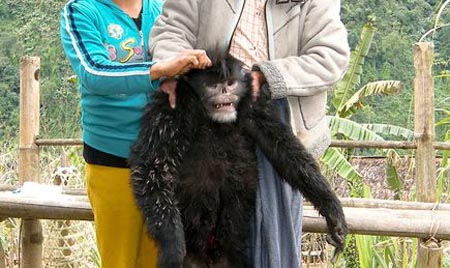
New Snub-Nosed Monkey Discovered, Eaten
Source: National Geographic Daily News By: Rachel Kaufman
A new monkey species in Myanmar is so snub-nosed that rainfall is said to makes it sneeze, but that's apparently the least of problems. The only scientifically observed specimen (pictured above) had been killed by local hunters the time researchers found it, and was eaten soon after. But local demand for monkey meat is only one reason the new species is already considered endangered.
Scientists first learned of "Snubby", as they nicknamed the species, from hunters in the remote, mountainous Kachin state in early 2010, according to the U.K.-based conservation group Flora & Fauna International (FFI), which announced the discovery Wednesday. The hunters told the team of R. strykeri's fleshy lips, upturned nose, and odd respiratory issue: Rain falling into the monkeys' noses possibly causes the animals to sneeze, so they often spend soggy days with their heads tucked between their knees, the hunters said. "We were surveying during the rainy season, and we were asking, 'Does it make sense to survey these monkeys in the rainy season?' said Frank Momberg, FFI's Asia-Pacific development director. The hunters said, "Of course! It's much easier to find them", due to the sound, he added... Click Here To View Full News Article |
|
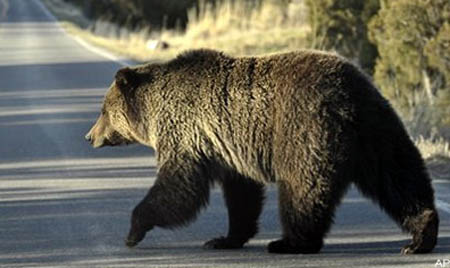
Grizzly numbers hit new high in Yellowstone region
Source: KATU-Portland By: Matthew Brown AP
BOZEMAN, Mont. (AP) - Grizzly bear numbers in and around Yellowstone National Park have hit their highest level in decades, driving increased conflicts with humans as some bears push out of deep wilderness and into populated areas. Scientists from a multi-agency research team announced Wednesday that at least 603 grizzlies now roam the Yellowstone area of Wyoming, Montana and Idaho. That's more than three times the number in 1975, when hunting was outlawed and the species placed on the endangered list.
But more bears also means more run-ins with humans, although bear biologists are quick to point out that visitors to the region are more likely to die in a vehicle crash than a grizzly mauling. Two people have been killed by grizzlies in the Yellowstone region this year: one west of Cody, Wyo., and another near Cooke City, Mont. In the latest encounter, on Wednesday, a hunter in Wyoming reported to authorities that he was attacked by a grizzly that he shot and killed in self-defense. The man, whose name was not available, suffered lacerations from a bite to the leg. The injuries were not considered life threatening. The incident remained under investigation and the death of the bear was not immediately confirmed. It would mark the 46th grizzly killed or removed from the wild this year. Factoring in unreported killings, wildlife officials estimate at least 62 bears killed or removed so far this year... Click Here To Read The Article In Full |
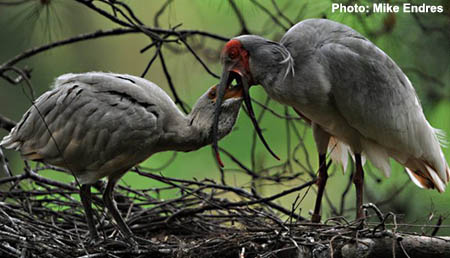
Study: A fifth of the world's vertebrates at risk of extinction
Source: CNN Environment
A fifth of the world's vertebrates are facing extinction because of invasion and the effects of agriculture, a global study warned Wednesday. The number of species facing extinction is rising, according to scientists, but conservation efforts are helping reduce the overall rate. "The backbone of biodiversity is being eroded," said Edward O. Wilson, a professor and ecologist at Harvard University. "One small step up the Red List is one giant leap forward towards extinction. This is just a small window on the global losses currently taking place."
Scientists launched the study, dubbed the Red List, at the United Nations biodiversity summit in Nagoya, Japan, where talks on protecting the environment are under way. The study, which will also be published in the journal Science, found that at least 41 percent of amphibians are closer to extinction, making them the most threatened animals. Thirteen percent of birds qualify to be on the list. Scientists used data from 25,000 species to study the world's mammals, birds, amphibians, reptiles and fish... Click Here To Read Full Article |
|
National Wildlife Humane Society Thank-you for allowing us into your email inbox. You are a valued member of NWHS and we look forward to providing you with current news concerning NWHS, other matters concerning wildlife, wildlife habitats and our wildlife rescue/sanctuary facility, "Top Of The Rock". Please invite other concerned humans to join our organization. It is our members that allow us to exist, expand and assist wildlife and precious wild habitat.
Humane is the responsibility of Humanity
FAIR USE NOTICE: This mailing may contain images and excerpts the use of which have not been pre-authorized. This material is made available for the purpose of analysis and critique, as well as to advance the understanding of political, media and cultural issues. All articles and commentary are provided as non-commercial, public educational and outreach content. The 'fair use' of such material is provided for under U.S. Copyright Law. In accordance with U.S. Code Title 17, Section 107, material on this mailing (along with credit links and attributions to original sources) is viewable for educational and intellectual purposes. If you are interested in using any copyrighted material from this mail for any reason that goes beyond 'fair use,' you must first obtain permission from the copyright owner.
Note: NWHS provides hyperlinks from email to third party sites as a convenience to users. NWHS does not endorse such third parties or the contents of any such sites. NWHS has no control over, makes no representation or warranty and disclaims all liability with respect to such sites. To use articles originated by NWHS, please use unaltered and provide a link back to NWHS. http://www.humanewildlife.org/ |
|
To Contact National Wildlife Humane Society
info@humanewildlife.org "A world without wildlife is a world not fit for humans"
Click Here To Visit NWHS Newsletter Archive
| | ||