|
|

|
National Wildlife Humane Society |
| Wildlife Conservation News |
|
|
|
| Member News |
| Indonesian Tiger Pets |
| Dying Bats |
| The Deep Sea |

National Wildlife Humane Society
A non-profit wildlife conservation organization working to preserve and protect threatened and endangered species.
|

| |
|



|
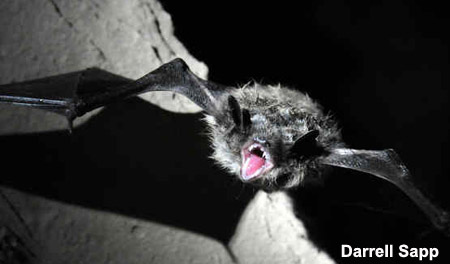
Solving the mystery of the dying bats
Source: Philadelphia Inquirer - By Sandy Bauers
Cradling it in gloved hands, she stretched out its wings, fanned out its minuscule toes, and examined its snout. "I've seen worse," Reeder whispered, "but, boy.. he's just covered in fungus." The Bucknell biology professor studied the bat. She knew it was white-nose syndrome, first discovered three years ago in a cave near Albany, N.Y. Bats that should have been hibernating inside were dead on the ground outside.
Since then, a million bats have died in the Northeast. Some caves have had 99 percent mortality. In a growing what-done-it mystery, white-nose spread last year to Pennsylvania and New Jersey. The latest models predict the little brown bat, the most numerous in the nation, could be extinct in 7 to 30 years...
Click Here To Read The Article In Full |
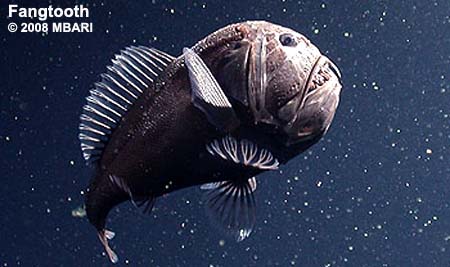
Understanding human threat to the Earth's largest habitat - the deep sea
Source: PhysOrg - Photo: ©2008 MBARI
When most people think about the deep sea, they picture broad expanses of muddy seafloor. However, the majority of deep-sea animals, and perhaps the majority of all animals on Earth, live in the "deep pelagic zone"- the dark waters between the ocean surface and the seafloor. An important research paper by MBARI marine biologist Bruce Robison points out that this seemingly remote habitat is increasingly being affected by human activities. Robison's paper highlights the urgent need to understand and protect the diversity of animals in this unique and vital habitat.
The "deep pelagic zone" extends from about one hundred meters (330 feet) below the ocean surface to just above the deep seafloor. Because it is four to ten kilometers (2.5 to 6 miles) deep and covers perhaps two thirds of the Earth's surface, this zone forms the largest single habitat for life on Earth. Robison suggests that the immense volume of this three-dimensional habitat contains more different species and more individual organisms than any other environment on the planet.
After decades of studying deep-sea animals, Robison says, "For most people these animals are out of sight and out of mind. They are also out of reach to all but a few scientists equipped with....
Click Here To Read More (Includes a cool video) |
|
National Wildlife Humane Society Thank-you for allowing us into your email inbox. You are a valued member of NWHS and we look forward to providing you with current news concerning NWHS, other matters concerning wildlife, wildlife habitats and our wildlife rescue/sanctuary facility, "Top Of The Rock". Please invite other concerned humans to join our organization. It is our members that allow us to exist, expand and assist wildlife and precious wild habitat.
Humane is the responsibility of Humanity
FAIR USE NOTICE: This mailing may contain images and excerpts the use of which have not been pre-authorized. This material is made available for the purpose of analysis and critique, as well as to advance the understanding of political, media and cultural issues. All articles and commentary are provided as non-commercial, public educational and outreach content. The 'fair use' of such material is provided for under U.S. Copyright Law. In accordance with U.S. Code Title 17, Section 107, material on this mailing (along with credit links and attributions to original sources) is viewable for educational and intellectual purposes. If you are interested in using any copyrighted material from this mail for any reason that goes beyond 'fair use,' you must first obtain permission from the copyright owner.
Note: NWHS provides hyperlinks from email to third party sites as a convenience to users. NWHS does not endorse such third parties or the contents of any such sites. NWHS has no control over, makes no representation or warranty and disclaims all liability with respect to such sites. To use articles originated by NWHS, please use unaltered and provide a link back to NWHS. http://www.humanewildlife.org/ |
|
To Contact National Wildlife Humane Society
info@humanewildlife.org "A world without wildlife is a world not fit for humans"
Click Here To Visit NWHS Newsletter Archive
| | ||