NWHS #018

September 10, 2006

Dear NWHS Supporter,

Welcome to issue #018 of the NWHS E-Newsletter. We thank all subscribers for allowing us into your email inbox.

Please feel free to forward this email to others that are interested in wildlife. If you enjoy this newsletter, invite others to sign up.

You may visit the National Wildlife Humane Society's website at: http://www.humanewildlife.org

More NWHS news can be viewed on our site at:
 
If you would like to receive this Newsletter and are not subscribed, just let us know at info@humanewildlife.org.

Please refrain from replying directly back to us from this Newsletter. If you wish to email us, concerning this Newsletter, or any other matter, please do so at:
If you see a current and interesting wildlife story, feel free to send us a link (to the info@ email address) to share with the other subscribers.
 

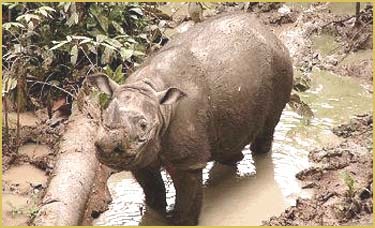
Sumatran Rhinoceros-Genus:Dicerorhinus,Species:sumatrensis

Sumatran Rhino Seen in Borneo Jungles

Source - Newsday.com
September 8, 2006

KUALA LUMPUR, Malaysia - Wildlife rangers have made the first-ever sighting of a Sumatran rhino deep in the jungles of Borneo, taking video and photos of a single male after a decade-long search, conservationists said Friday. SOS Rhino, a Chicago-based wildlife foundation, hailed the recent sighting in Malaysia's Sabah state as a "major discovery" that suggested a growing population of the Sumatran rhino was present in the wild.

The foundation said rangers from its expedition followed tracks that led them to the male rhino, but didn't say exactly when it took place. "We have been tracking these animals here in Sabah for almost 10 years now and although we have seen tracks and signs of the rhino, this is the actual first sighting of a rhino in the wild," it said in a statement. "We are excited about the photos and video clip as it also helps us determine the sex of the animal and its health condition in its natural habitat, something that was dependent on guess work before."

The Sumatran rhino is the smallest and most endangered among five species of rhinos left in the world, and the only rhino species found in Malaysia. They have rapidly vanished in recent decades as their rain forest habitat has been lost to logging, plantations and other development and poachers hunted them for horns used in aphrodisiacs and traditional medicines.

Sabah is the last preserve of the Borneo Sumatran rhino, a subspecies of the Sumatran rhino, a bristly, snub-nosed, smaller version of the African variety. The subspecies has already become extinct in other parts of Borneo because of poaching. Borneo island is divided between Malaysia's Sabah and Sarawak states, Indonesia's Kalimantan province and the oil-rich sultanate of Borneo.

Fewer than 300 rhinos of the second subspecies, the western Sumatran rhino, are believed to be living on Indonesia's Sumatra island and mainland Malaysia. Hopes for the Borneo subspecies were boosted after Malaysian government wildlife officials and World Wildlife Fund experts found evidence of at least 13 of them in May last year.

Rhino protection units have since launched patrols to deter poaching.

SOS Rhino: http://www.sosrhino.org 
2006 Newsday Inc


Microbes Can Clean Up Toxic Waste Dumps, Scientist Says

September 08, 2006 — By Reuters

CANBERRA - Microbes with a taste for toxic waste may hold the solution to cleaning up contaminated industrial sites and poisoned waterways across the globe, saving billions of dollars in cleanup bills, an Australian scientist said.

Microbes found in old waste sites in Australia not only tolerate lethal soil and water cocktails created by waste petroleum and chlorine, but can break them down so they no longer threaten humans, the scientist said on Friday.

"We have isolated bacteria which can live on those waste compounds," Megha Mallavarapu, from a government-backed environmental research centre based in South Australia state, told Reuters.

"We are enhancing the microbes present," Mallavarapu said, adding the altered bacteria were able to break down toxins faster.

Industrial contamination, he said, was one of the greatest threats facing societies world-wide, with Australia alone facing a A$5 billion ($3.8 billion) cleanup bill.

"Anywhere there has been a fuel dump, a munitions store, an old chemical factory or heavy manufacturing plant, there is potential for toxic substances to leak into groundwater underneath," said Mallavarapu.

The researchers said there were millions of toxic dumps scattered through Asia, with waste from the region's mega cities often pouring untreated into waterways meant to be lifelines for nearby communities.

The centre, set up to develop and export new ways to repair ravaged environments, said it was training researchers in Bangladesh, India, China and South Korea to deal with the problem.

But Mallavarapu said there was no single super-bug or solution, especially in heavily contaminated sites. He said scientists first had to look for new types of bacteria and enhance them, or provide oxygen or food to lift their numbers.

"It depends on the nature of the contaminant at each particular site," he said. "Sometimes we have to help nature."

Source: Environmental News Network


If you received this E-Newsletter from a friend, or viewed from a website, you can email us and ask to receive your own NWHS E-Newsletter Free Subscription. Make certain to set spamblocker to receive emails from our news email address, info@humanewildlife.org

If you no longer wish to receive our NWHS Newsletter, just email us and ask to be removed. Make certain to specify the email address you wish to be removed from the subscription list, if different from the email used to write us.

Articles not under the National Wildlife Humane Society (NWHS) by-line, do not necessarily reflect the opinions or policies of NWHS. Articles not origintating from NWHS, are passed onto interested recipients as is, and uneditied.
 
Privacy Policy: Your name, email address, or any other private info will never be sold, traded, or furnished to any other parties. Your privacy is assured, and all info is stored offline. All subscribers' addresses are hidden from all other subscribers and sent as "blind copies" (BCC:).